
TL;DR
- To verify DC (NA) conversion of agricultural land in Karnataka, look up the conversion/affidavit number on the Bhoomi land-conversion portal, then confirm the RTC (Pahani) nature-of-land column now reads non-agricultural — the updated RTC is the ultimate proof, not the order paper alone.
- A conversion order PDF on its own can be forged; cross-check it against the government database and the RTC. If the order "exists" but the RTC still says agricultural, treat the conversion as not done.
- Under the Karnataka Land Revenue (Amendment) Rules, 2025, agricultural land that falls inside an approved master plan and conforms to its zoning is treated as converted without separate DC permission — so the owner can move straight to layout or project approvals.
- Outside a master plan, the Deputy Commissioner must decide within a short statutory window, and a "deemed approval" can be triggered if the office does not act in time — so "no order yet" is no longer always a red flag.
- Match the converted area, survey number, and permitted use exactly. Partial conversion, expired/lapsed orders, and use mismatch (an industrial order being sold as residential) are the most common traps a diligence team catches.
How do I verify DC / NA conversion of agricultural land in Karnataka?
The short answer: do two independent checks. First, confirm the conversion order is genuine by looking it up on the government Bhoomi portal using its conversion or affidavit number. Second — and this is the decisive step — pull the latest RTC (Pahani) for the survey number and confirm the nature-of-land column now records non-agricultural use. A conversion is only real when the land record itself reflects it.
DC conversion (also called NA conversion, "diversion," or land-use change under Section 95 of the Karnataka Land Revenue Act, 1964) is the formal permission to use agricultural land for a non-agricultural purpose — residential, commercial, industrial, and so on. Without it, an agricultural parcel cannot legally be built on or sold as a site, no matter what the seller's brochure says. Conversion is a core item in the Land pillar of any title search report, and getting it wrong is one of the costliest mistakes in Karnataka land buying.
Step-by-step verification
| Step | What to do | What it confirms |
|---|---|---|
| 1 | Collect the conversion order copy from the seller — note the conversion order number / affidavit number, date, DC office, survey number, and converted extent | Gives you the reference IDs to verify against the database |
| 2 | Go to the Bhoomi / Karnataka land-conversion portal (landrecords.karnataka.gov.in and the land-conversion service) and search the conversion/affidavit status by that number plus district, taluk, hobli, village | Confirms an order with that number actually exists in the government system |
| 3 | Open the digitally-signed order PDF from the portal and compare it line-by-line with the seller's copy | Catches a tampered or photoshopped order paper |
| 4 | Pull the current Bhoomi RTC (Pahani) for the same survey/hissa and read the nature-of-land column | The land record itself shows non-agricultural — this is the ultimate proof |
| 5 | Check the mutation (MR) register for the entry that recorded the conversion | Confirms the conversion flowed into the record of rights, not just a standalone order |
If the order checks out on the portal and the RTC nature-of-land column reflects non-agricultural use for the exact survey number and extent, the conversion is genuine and recorded. If any of those break — order not found, signatures don't match, or the RTC still says agricultural — stop and get a lawyer to investigate before paying anything.
For the column-by-column mechanics of reading the RTC, see our guide on how to read a Bhoomi RTC (Pahani) — the same skill that lets you read Column 11 lets you read the nature-of-land entry.

Why is the RTC — not the conversion order — the ultimate proof?
Because the RTC is the live government record of what the land actually is, while the order is only the permission that should have produced that record. The two can diverge, and when they do, the RTC is what matters for buyers.
A common failure pattern: a valid conversion order is issued, but the change is never carried into the RTC and mutation register — so the parcel still legally reads as agricultural even though a real order exists. Another pattern is the reverse: a forged or expired order is shown, while the RTC honestly still says agricultural. In both cases the RTC tells you the truth. Treat the conversion order and the RTC as a matched pair; you need both to agree, on the same survey number and the same converted extent.
This is also why a clean-looking document is never enough on its own — paper can be manufactured, while the cross-checked government record is much harder to fake.
How do I spot a fake or invalid conversion order?
Verify it against the source database and read it for internal consistency. Most "fake conversion" problems are not master forgeries — they are real orders being misrepresented, or genuine-looking PDFs that simply do not exist in the system.
The red-flags checklist
- Order not found on the portal. If the conversion/affidavit number returns nothing on the government system, treat the paper as fake until proven otherwise.
- No digital signature / QR or a broken one. Modern Karnataka conversion records are digitally signed. A scanned, hand-stamped paper with no verifiable digital signature is a warning sign.
- Survey number or extent mismatch. The order converts a survey number to the extent of, say, one acre, but the seller is marketing two acres — only the converted portion is non-agricultural. Partial conversion sold as full conversion is extremely common.
- Wrong permitted use. The order permits industrial use, but the land is being sold for a residential layout. Conversion is purpose-specific; an industrial conversion does not authorise a housing project.
- Lapsed / expired order. Conversion orders historically carried conditions and timelines (for example, putting the land to the converted use within a stated period). A long-dormant order may have lapsed.
- RTC contradicts the order. As above — if the RTC nature-of-land column still says agricultural, the conversion has not taken legal effect, whatever the paper claims.
- Conditions ignored. Many orders require setbacks, road-widening surrender, or fee payment. Unpaid conversion fees or unmet conditions can unravel the conversion.
When several of these appear together, you are usually looking at either a manufactured document or a genuine order that does not say what the seller claims. This is squarely a Land-pillar item on the developer's due-diligence checklist.
What changed in 2025–2026? (The master-plan exemption)
The biggest shift: under the Karnataka Land Revenue (Amendment) Rules, 2025, agricultural land that falls inside an approved master plan and conforms to that plan's zoning no longer needs separate prior DC permission to convert. Where farmland sits in a designated residential or commercial zone of the plan, it is treated as converted for non-agricultural use — removing the separate conversion step so the owner can move directly to layout or project approvals (the prescribed conversion fee under Section 95 still applies).
This rewires what "no DC order" means. Previously, the absence of a DC conversion order on agricultural land was a hard stop. Now, for a parcel inside an approved master plan and consistent with its zone, you may not find a classic DC order at all — so you must check which regime the land falls under before judging it.
Other practical changes introduced by the 2025 reform:
| Change | What it means for verification |
|---|---|
| Master-plan land conforming to zoning is treated as converted, without separate DC permission | Check the master-plan zoning for the parcel and confirm the updated RTC, instead of hunting for a classic DC order |
| Deemed approval if the DC does not act within the prescribed window (about 30 days; decisions targeted within roughly 15 days outside master-plan areas) | "Order pending" is no longer automatically a red flag — but a deemed approval must still surface in the record; confirm it shows up in the RTC/mutation |
| Notarised affidavit in prescribed forms (Forms 21B / 21C) now required with applications | A modern, post-2025 conversion file should include the affidavit; its absence on a fresh conversion is worth questioning |
| Automatic conversion for small industries up to two acres and for renewable-energy projects | For these uses, the lack of a conventional DC order may be by design — confirm the use category genuinely qualifies |
Two cautions. First, the exemption is conditional: it applies only when the land is inside an approved master plan and the proposed use matches the zoning. Land zoned agricultural/green/buffer inside a plan is not auto-converted. Second, "deemed" or "automatic" conversion is not an excuse for a missing record — the change must still reach the RTC and mutation register for the title to be clean. Always close the loop on the land record.
The 2025–2026 reforms also need to be read alongside the earlier repeal of Sections 79A and 79B of the Karnataka Land Reforms Act, 1961, which removed the income/occupation restrictions on who may buy agricultural land. We unpack that separately in can a non-farmer buy agricultural land in Karnataka in 2026. Conversion and purchaser-eligibility are different questions — confirm both.
What does verifying conversion NOT tell you?
Verifying a conversion confirms the land may legally be used for a non-agricultural purpose. It does not, on its own, confirm clear title, a clean encumbrance position, lawful development approvals, or freedom from litigation. Conversion is one Land-pillar check among many.
Specifically, a verified conversion does not tell you:
- Whether the title is clear. Conversion says nothing about the 30-year chain of ownership, undisclosed heirs, or PTCL/grant-land restrictions. That is a separate ownership investigation.
- Whether there is a mortgage or charge. A converted parcel can still be mortgaged. You need a Kaveri Encumbrance Certificate, a CERSAI search, and a deed sweep — and even then, an EC has blind spots. See what an encumbrance certificate does NOT show.
- Whether layout/building approvals exist. Conversion is permission to change land use; it is not plan sanction. A converted parcel still needs layout approval, a released plan, and building-plan sanction to be developed.
- Whether the khata is in order. For urban/local-body land, you separately need a valid khata.
- Whether litigation is pending. A conversion order says nothing about a stay, an injunction, or a pending suit over the same land. That is the Litigation pillar.
In other words, "conversion verified" is a green light on one gate, not the whole property. Deedwise's approach mirrors this: AI gathers the Bhoomi conversion record, the RTC, the EC, and the rest, drafts the findings across all four pillars — and a lawyer reviews and signs before anyone relies on it.
Frequently asked questions
How do I verify a DC conversion order online in Karnataka? Use the conversion or affidavit number from the seller's order to search the Bhoomi / Karnataka land-conversion portal (under the land records and land-conversion services) along with the district, taluk, hobli, and village. Open the digitally-signed order from the portal and compare it with the seller's copy. Then pull the current RTC (Pahani) for the same survey number and confirm the nature-of-land column reads non-agricultural. If the order exists on the portal and the RTC reflects the change, the conversion is genuine.
Is the conversion order or the RTC the real proof of conversion? The RTC is the decisive proof. The conversion order is the permission; the RTC is the live government record of what the land actually is. A real order can fail to update the RTC, and a fake order can be shown while the RTC still says agricultural. For a buyer, the conversion is only effective when the RTC nature-of-land column records non-agricultural use for the exact survey number and converted extent.
Do I still need DC conversion in Karnataka in 2026? Not always. Under the Karnataka Land Revenue (Amendment) Rules, 2025, agricultural land inside an approved master plan that conforms to its zoning is treated as converted without separate DC permission, so the owner can move straight to layout or project approvals (the prescribed conversion fee still applies). There are also automatic conversions for small industries up to two acres and for renewable-energy projects. Outside a master plan, you still go through the DC, who must decide within a short window, with deemed approval if the office does not act in time.
How can I tell if a conversion order is fake? Verify it against the government database, not just by eye. Red flags include: the conversion/affidavit number returns nothing on the portal; no verifiable digital signature; the converted survey number or extent does not match what is being sold (partial conversion sold as full); the permitted use is wrong (an industrial order used for a residential project); the order has lapsed; or the RTC still records the land as agricultural. Several of these together usually mean a manufactured or misrepresented order.
Does a verified conversion mean the title is clear? No. Conversion only confirms the land may be used for a non-agricultural purpose. It does not confirm clear ownership, freedom from mortgages or charges, valid layout and building approvals, a proper khata, or the absence of litigation. Each of those is a separate due-diligence check across the Ownership, Encumbrance, and Litigation pillars and should be completed before you rely on the conversion alone.
Continue reading
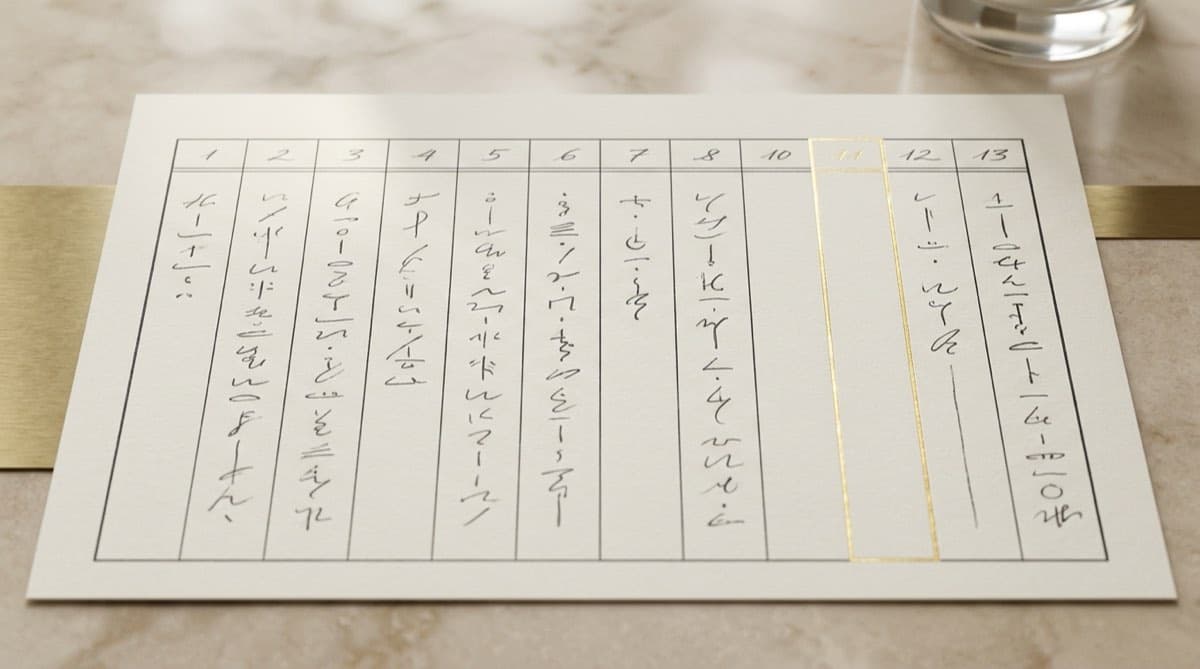
How to Read a Bhoomi RTC (Pahani): All 13 Columns and the Column 11 Red Flags
11 min read

How to Check Karnataka Land Records (RTC/Pahani) by Survey Number on Bhoomi
11 min read

How to Download an Encumbrance Certificate Online from Kaveri in Karnataka (Form 15 vs Form 16)
11 min read

Bhoomi RTC for Karnataka Land Acquisition: A Developer's Guide
11 min read
Automate your due diligence
Skip the manual portal work.
Deedwise automates everything in this article — across every connected portal — and delivers a complete Title Search Report in hours.
Request Access