TL;DR
- BDA, BMRDA, BIAAPA and BBMP (now folded into the Greater Bengaluru Authority) are four different planning authorities, and which one governs your plot decides whether you can legally build, get loans, and resell cleanly. A plot is safest when it sits in a BDA- or BMRDA-approved layout and carries A-Khata (now e-Khata), DC conversion, and a sanctioned plan from the right authority.
- BDA = Bangalore Development Authority: planned layouts inside the city core, finished infrastructure, generally clean titles. BMRDA = the metropolitan region authority for the peripheral belt around Bengaluru. BIAAPA = the airport-area authority north of the city. BBMP/GBA = the municipal corporation that levies property tax and issues Khata inside city limits.
- The danger zone is "approved layout" claims that aren't true: revenue-site (B-Khata) plots on unconverted agricultural land, or layouts approved by a panchayat rather than the actual planning authority. These look identical in a brochure and fail at the bank and the sub-registrar.
- You cannot tell which authority governs a parcel from the marketing name alone. You confirm it from the survey number, the RTC/conversion order, the Khata, and the approved-layout plan — the same records a title search pulls.
- This is a Land-pillar question. Get the authority, conversion, and plan approval verified before you pay an advance, and have a lawyer sign off on the result.
What do BDA, BMRDA, BIAAPA and BBMP zoning mean for whether I can build on Bangalore land?
Each name is a different statutory body with authority over a different geography, and they answer different questions about your plot. In plain terms: the planning authority decides whether land may be developed and lays out the master plan; the municipal body levies tax and maintains civic records once an area is built up. Buying safely means matching your parcel to the correct authority and confirming that authority actually approved the layout and the building.
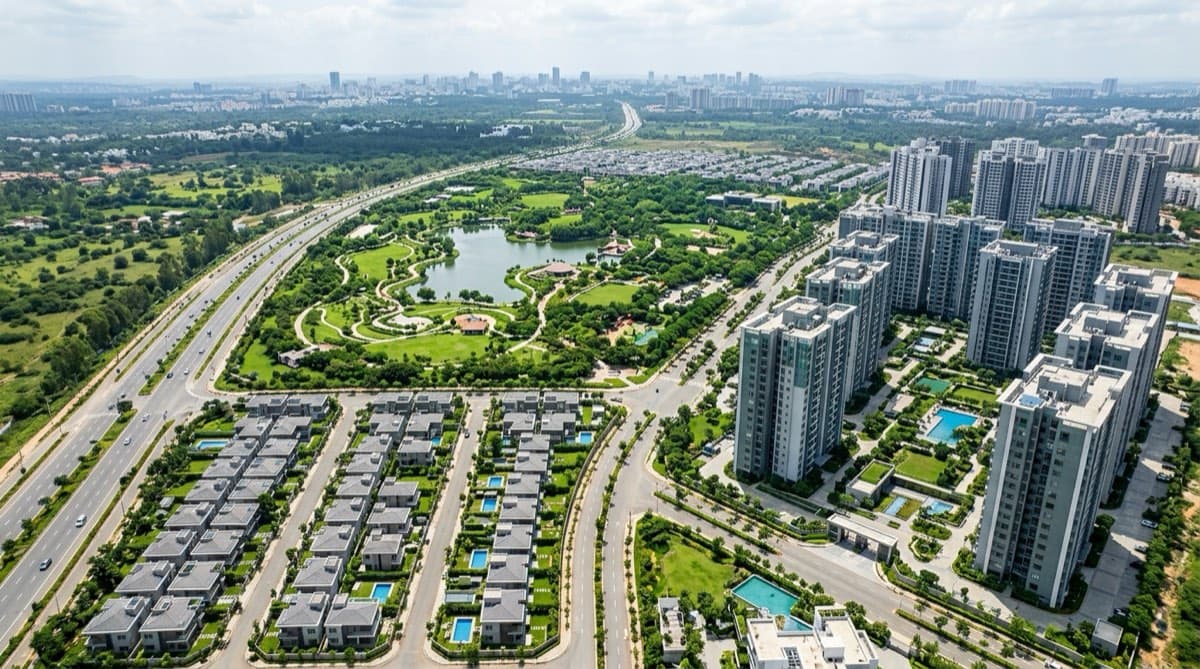
Bengaluru's growth has spilled far past the old city, so a single parcel can fall under different regimes depending only on where it sits. Here is the practical map:
| Authority | Full name | What it is | Where it applies | What it controls |
|---|---|---|---|---|
| BDA | Bangalore Development Authority | Planning + development authority for the city | Bengaluru metropolitan area / city core and BDA layouts | Master plan (RMP), BDA layouts, layout/plan approval, betterment |
| BBMP / GBA | Bruhat Bengaluru Mahanagara Palike, now under the Greater Bengaluru Authority | Municipal corporation (civic body) | Municipal limits of the city | Property tax, Khata (e-Khata/e-Aasthi), trade licences, civic services |
| BMRDA | Bangalore Metropolitan Region Development Authority | Regional planning authority | The wider metropolitan region / peripheral belt around the city | Regional structure plan, layout approval in its zone (via local planning authorities) |
| BIAAPA | Bangalore International Airport Area Planning Authority | Local planning authority for the airport belt | Devanahalli / airport corridor north of the city | Layout and building approval, zoning in the airport region |
A fifth name you will meet is the DC (Deputy Commissioner) conversion order — not an authority, but the order that converts agricultural land to non-agricultural (residential/commercial) use. No layout or building approval is valid on land that is still agricultural in the records.
Why this matters before you pay
A plot that is technically beautiful on paper can be unbuildable in practice if the wrong body "approved" it. The two failure modes that cost buyers the most:
- Layout approved by the wrong authority. A gram panchayat or a local body cannot grant a valid layout approval where BDA, BMRDA or BIAAPA is the competent planning authority. Panchayat-"approved" sites on the city fringe are a classic trap.
- Building permitted on unconverted land. Without a DC conversion order, the parcel is still agricultural — no plan approval, no occupancy, and a title that a careful buyer (and most banks) will reject.
For the full sequence of checks that surrounds this, see the developer's property due diligence checklist.
BBMP vs BDA vs BMRDA plots: which is safest to buy?
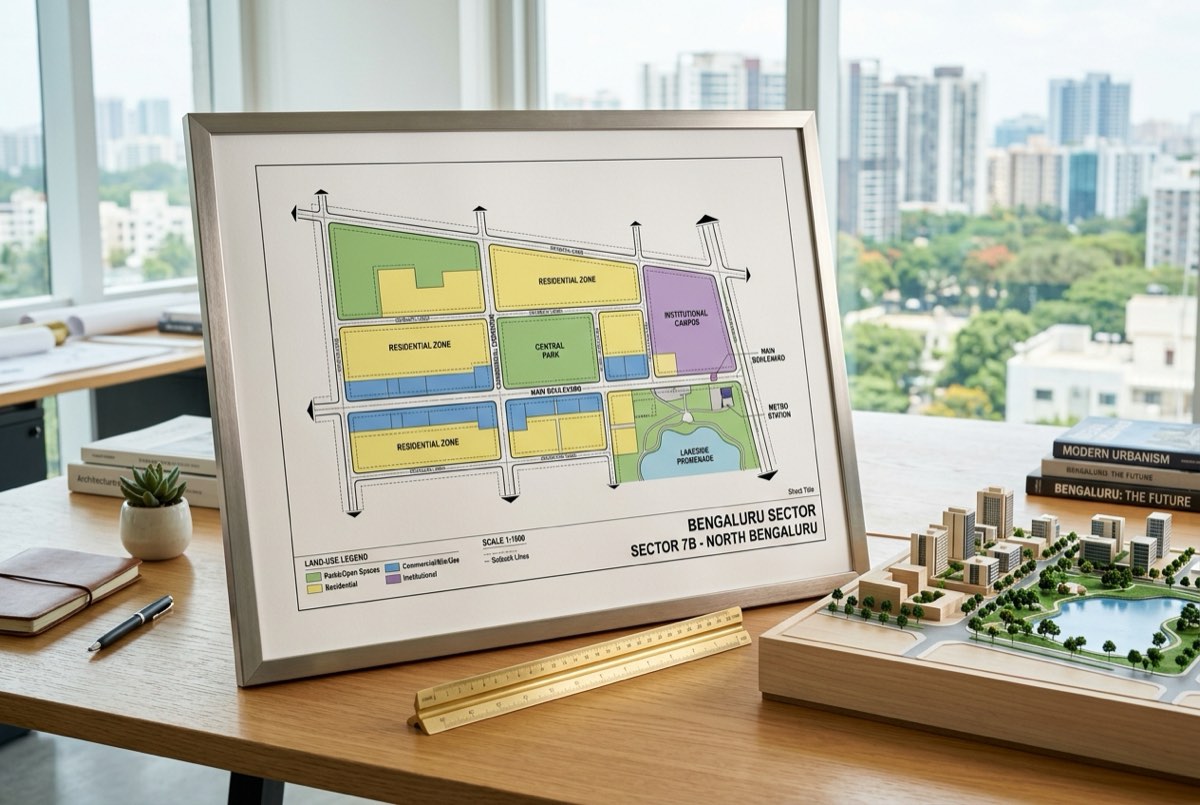
Direct answer: a BDA-allotted or BDA-approved layout plot inside the city, with A-Khata (e-Khata) and a sanctioned plan, is the cleanest profile. A BMRDA/BIAAPA-approved layout on properly converted land is also sound — it just sits farther out with infrastructure that may still be maturing. The risk rises sharply for revenue sites and panchayat layouts that have no planning-authority approval at all.
| Profile | Typical title quality | Loan-friendly | Build/resell ease | What to watch |
|---|---|---|---|---|
| BDA layout (allotted or approved) | Generally clean | Yes | Easiest | Confirm allotment chain; BDA NOC for transfer if applicable |
| BMRDA / BIAAPA approved layout | Sound when converted | Usually yes | Good, infra varies | Verify the layout is on the approved-layout list; conversion order present |
| BBMP/GBA A-Khata plot | Depends on underlying approvals | Yes | Good inside city | A-Khata is a tax record, not a title — verify the deed chain |
| B-Khata / revenue site | Often defective | Hard or no | Difficult | Likely unconverted or unapproved layout; treat as high-risk |
| Gram panchayat "approved" layout (in a PA zone) | Frequently invalid | No | Very difficult | Approval by the wrong authority; needs regularisation, often not possible |
A-Khata vs B-Khata, and what e-Khata changed
A-Khata means the property is recorded as fully compliant for civic purposes — eligible for building approval, loans and straightforward transfer. B-Khata historically flagged properties that were not fully compliant (commonly revenue layouts or unconverted parcels). Karnataka has moved Khata records onto the digital e-Khata / e-Aasthi system, and e-Khata is now required for property registrations within municipal limits. The crucial myth-buster: a Khata (even an A-Khata or e-Khata) is a municipal tax and identification record, not proof of title. It tells you the civic body recognises the property for tax; it does not, on its own, prove the seller owns it or that the layout was legally approved. You still verify ownership through the deed chain and encumbrance record.
How do I actually verify which authority governs a Bangalore plot — and that it is approved?
You verify it from the land records, not the brochure. The plot's survey number is the key that unlocks every record; from there you confirm classification, conversion, the controlling authority, the approved layout, and the Khata.
The core documents and where they come from:
| Check | Record | Source |
|---|---|---|
| Is the land agricultural or converted? | RTC (Pahani) + DC conversion order | Bhoomi RTC; conversion order from the DC office |
| Who owns it / 30-year chain | Sale deeds, mother deed, mutation (MR) extracts | Kaveri 2.0; Bhoomi mutation register |
| Any mortgage or charge? | Encumbrance Certificate (EC) | Kaveri 2.0; CERSAI for institutional mortgages |
| Which authority + approved layout? | Sanctioned layout plan, release/approval order | BDA / BMRDA / BIAAPA records; layout plan |
| Civic recognition + tax status | Khata / e-Khata (e-Aasthi) | BBMP/GBA e-Aasthi portal |
| Spatial / zoning fit | Master plan zoning, parcel boundary | K-GIS; the relevant RMP / zoning map |
Practically, the Bhoomi RTC confirms whether the land is still agricultural and who the recorded holder is, the conversion order proves it can be built on, and the Kaveri 2.0 encumbrance certificate reveals registered transactions and mortgages. Cross-checking the survey number against the approved-layout plan tells you whether the layout the seller is selling actually exists in the authority's records.
FSI / FAR and the zoning check
Authority approval also sets what and how much you can build. FAR (Floor Area Ratio), also called FSI (Floor Space Index), is the ratio of permissible built-up area to plot area, and it is fixed by the zone and road width in the applicable master plan (the BDA Revised Master Plan inside the city; the regional or local plan outside it). Two adjoining plots can carry different FAR if they fall in different zones or front different road widths. Before you underwrite a project, confirm the zoning classification (residential, commercial, mixed, industrial, green/agricultural, or buffer) and the FAR the plot's frontage actually permits — a parcel zoned green, agricultural, or sitting in a lake/valley buffer may be effectively unbuildable regardless of who "approved" the layout.
What these records and approvals cannot tell you
The records confirm legality on paper; they do not catch everything, which is why a lawyer reviews the final report. A few honest limits worth pricing in:
- A Khata or e-Khata does not prove clean title. It is a tax record. Forged deeds, undisclosed heirs, or an unregistered prior agreement can sit behind a perfectly valid e-Khata.
- An "approved layout" claim is only as good as the approval order. Brochures and even some agreements assert BDA/BMRDA approval that the authority's own records do not support. Verify the order, not the claim.
- Conversion and approval can be partial or conditional. Part of a survey number may be converted while another part is not; an approval may carry conditions (setbacks, road widening, CDP reservations) that constrain the buildable area.
- Government acquisition and CDP reservations may not show in a deed. Land notified for acquisition, or reserved in the master plan for a road, park or public purpose, can override private rights — you check the planning notifications, not just the title.
- Litigation and family disputes sit outside the land-records portals. Active suits, partition claims, or PTCL/grant-land restrictions need a separate litigation and statutory check.
For the patterns that recur, see common title defects in Indian real estate, and if a joint development is on the table, run the diligence required before a JDA or MoU before you commit.
How Deedwise handles this
Deedwise treats the authority-and-approval question as part of the Land pillar of a Title Search Report. For a Karnataka parcel it pulls the RTC and conversion status, the Kaveri encumbrance and deed chain, the Khata/e-Aasthi record, and K-GIS spatial overlays, then flags mismatches — for example, a "BDA-approved" claim on land the RTC still shows as agricultural, or a parcel falling in a buffer zone. The AI gathers and drafts; a lawyer reviews the conversion order, the approval, and the zoning fit, and signs off. That review step is the difference between a data pull and a verdict you can rely on.
Frequently asked questions
What is the difference between BDA and BMRDA plots? BDA (Bangalore Development Authority) plots sit inside the city's planning area in layouts that BDA has planned or approved, usually with finished infrastructure and generally cleaner titles. BMRDA (Bangalore Metropolitan Region Development Authority) governs the wider peripheral belt around the city, where layouts are approved through its local planning authorities and infrastructure may still be maturing. A BMRDA layout on properly converted land is sound; it simply sits farther out. Both are far safer than an unapproved revenue or panchayat layout.
Is a BDA-approved plot always safe to buy? No. BDA approval of the layout is a strong positive, but it does not by itself prove the seller's title is clean. You still verify the 30-year deed chain, the encumbrance certificate for mortgages, the DC conversion order, and the Khata/e-Khata, and you confirm the approval order genuinely exists in BDA's records rather than relying on the brochure. A lawyer should review all of this before you pay an advance.
What does BIAAPA mean for property near Bangalore airport? BIAAPA (Bangalore International Airport Area Planning Authority) is the local planning authority for the Devanahalli/airport corridor north of the city. For a plot in that belt, BIAAPA — not a gram panchayat — is the competent body to approve the layout and the building plan and to set zoning. A layout in the airport area approved by anyone other than the competent planning authority should be treated as high-risk until verified.
Is A-Khata or e-Khata proof that a property has clear title? No. A-Khata (and the new digital e-Khata under the e-Aasthi system, which is now required for registrations within municipal limits) is a municipal tax and identification record. It shows the civic body recognises the property for tax and that it is broadly compliant, but it does not prove ownership or guarantee the layout was legally approved. Title is established through the registered deed chain and the encumbrance certificate, which a title search verifies.
Did the Greater Bengaluru Authority replace BBMP, and does that change my checks? Yes. BBMP has been reorganised under the Greater Bengaluru Authority (GBA), which became operational in 2025 and oversees five city corporations (North, South, East, West and Central Bengaluru). For a buyer, the records you check are essentially the same — Khata/e-Khata, property tax, and the planning approvals — and the survey number remains the key. The administrative structure changed; the underlying due-diligence checks did not.
How do I find out which authority governs my plot? Start from the survey number, not the marketing name. The RTC tells you the land's classification and recorded holder, the DC conversion order tells you whether it can be built on, and the sanctioned layout plan and approval order tell you which authority (BDA, BMRDA or BIAAPA) actually approved it. Cross-check the survey number against the authority's approved-layout records and the master-plan zoning. A title search assembles all of these from the relevant portals and a lawyer confirms the result.
Continue reading

What Title Due Diligence to Run Before Signing a JDA or MoU (Developer Guide)
10 min read

NRI Property Due Diligence: How to Verify Title Remotely Without Flying to India
10 min read

How Developers Run Title Due Diligence Across a Multi-Parcel Land Pipeline
10 min read

The Developer's Property Due Diligence Checklist: 30+ Checks Before You Sign the MoU
13 min read
Automate your due diligence
Skip the manual portal work.
Deedwise automates everything in this article — across every connected portal — and delivers a complete Title Search Report in hours.
Request Access