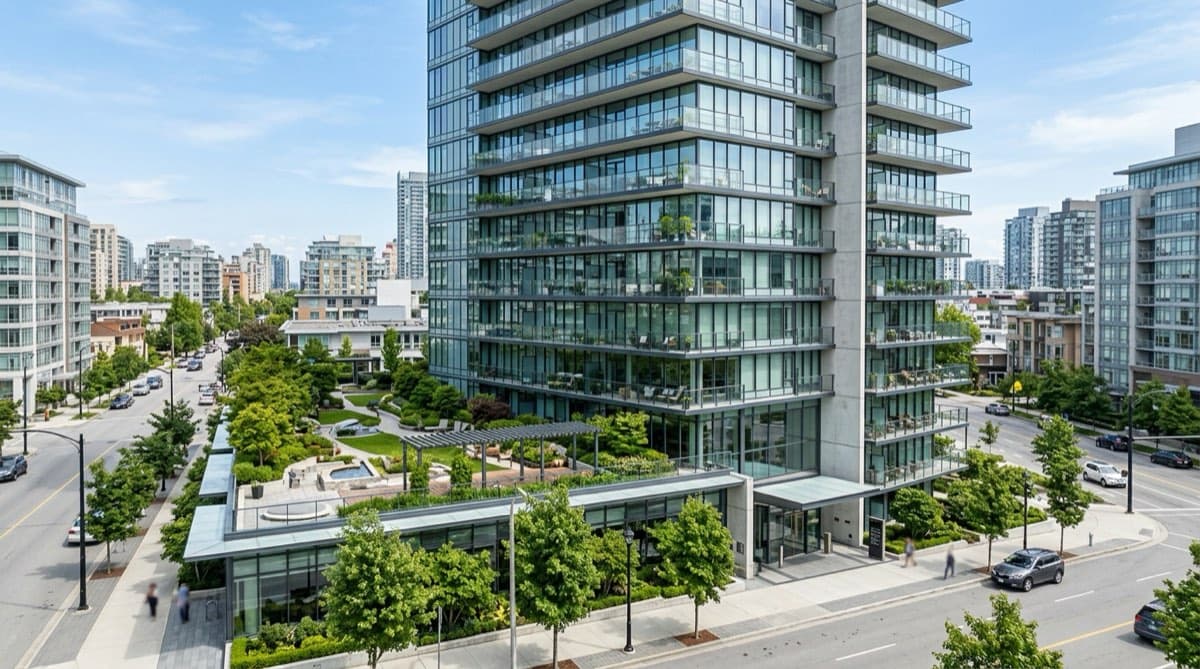
TL;DR
- Undivided Share of Land (UDS) is the proportionate, un-demarcated slice of the project's land that legally comes with your apartment — it is your real ownership stake in the land, and it determines your redevelopment payout, compensation in acquisition, and a big part of long-term resale value. A low or undisclosed UDS in the sale agreement is a genuine red flag.
- UDS is not the same as carpet area or super built-up area. Those measure the space you live in; UDS measures the land you own. You can have a large flat sitting on a tiny UDS.
- The standard formula is: UDS = (your unit's area / total area of all units) x total project land. The "area" used should be consistent across all flats — and RERA requires the builder to disclose your UDS in the agreement.
- UDS matters most when the building is old and gets redeveloped or demolished: the structure has no value then, only the land does, and your share of that land is your UDS.
- The fix is documentary: check that your UDS is written into the sale deed, matches the mother deed and the project's total land, and that the title to the land itself is clean — exactly the kind of check a Title Search Report and a lawyer's review are built to catch.
What is undivided share of land (UDS) and why does it matter when buying an apartment?
Undivided Share of Land (UDS) is the proportionate share of the total project land that is allotted to your apartment and registered in your name, but is not physically marked off or divided from the land of any other flat owner. When you buy a flat, you are actually buying two things: the exclusive right to your apartment (the constructed unit), and a fractional, un-demarcated co-ownership of the land beneath the whole project. That land fraction is the UDS.
It matters because in Indian real estate, buildings depreciate and land appreciates. Concrete, lifts and finishes lose value over the decades; the land underneath almost always gains value. So your apartment's deepest, most durable asset is not the flat — it is the UDS. When a building is eventually demolished or redeveloped, the structure is worth nothing, and what you are entitled to is decided almost entirely by your UDS.
UDS is not your carpet area (the core myth)
The single biggest confusion is treating UDS as a measure of apartment size. It is not. Carpet area, built-up area, and super built-up area all describe the space inside or attributed to your flat. UDS describes the land you co-own. The two are linked (your land share is calculated from your flat's relative size) but they answer different questions.
| Term | What it measures | Where it shows up |
|---|---|---|
| Carpet area | Net usable floor space inside your walls | RERA defines this; price-per-sq-ft should be quoted on it |
| Super built-up area | Carpet + share of common areas (lobby, stairs, lifts) | Builder's marketing; loading factor inflates it |
| UDS | Your proportionate share of the land | Sale deed, mother deed, RERA disclosure |
Two flats of identical carpet area in two different projects can carry very different UDS — because UDS depends on the total land and total built-up area of each project, not on your flat alone. A spacious flat in a high-rise tower on a small plot can have a smaller UDS than a modest flat in a low-rise complex on a large plot. If you want the underlying distinction between the document that conveys ownership and the ones that merely describe it, see our guide on the difference between a sale deed, agreement to sell, and conveyance deed.
How is UDS calculated, and what is a "fair" UDS?
UDS is calculated as a simple proportion of land:
UDS = (area of your apartment / sum of the areas of all apartments) x total land area of the project
The "area" in that formula should be applied consistently for every unit — ideally carpet area, but builders often use super built-up area. What matters is that the same basis is used for the numerator and the denominator, so the fractions of all owners add up to the whole of the land. If a builder uses super built-up for you but a smaller measure for the penthouses they have retained, the maths gets skewed against the ordinary buyer.
There is no single legally mandated "correct" UDS percentage — it is purely a function of how much land the project sits on relative to how much is built. A useful sanity check:
- Higher land-to-built ratio (low-rise, large plot) generally means a higher UDS per flat — good for long-term value.
- Dense high-rise on a small plot means a lower UDS per flat — common in cities, but you should know it going in.
- Be alarmed if your UDS does not appear at all in the sale deed, or if the total UDS of all flats does not reconcile with the project's total land area.
Why a low or undisclosed UDS is a red flag
A suspiciously low UDS, or one the builder is vague about, can mean the developer is holding back excess land or "loading" extra land share onto units they intend to keep (often for a future phase or their own resale). If your UDS is undisclosed, you cannot verify that you are getting the land share you paid for — and you have weak standing in any future redevelopment. RERA was designed partly to close this gap: builders are required to disclose the UDS attached to each unit as part of the agreement. Treat any reluctance to put UDS in writing as a reason to slow down and verify.
Why does UDS decide your redevelopment and resale value?
When an old apartment building is demolished and redeveloped, the value lies entirely in the land — and your slice of that land is your UDS. So your UDS directly drives:
- Redevelopment payout / new flat size: A developer redeveloping the plot negotiates with owners based on their land share. A higher UDS means a stronger claim to a larger replacement flat, more compensation, or a bigger share of the new project.
- Compensation in compulsory acquisition: If a government body acquires the land (for a road, metro, etc.), compensation flows to land owners in proportion to their UDS, not to the size of their flat.
- Insurance and disaster scenarios: If the building is destroyed, what survives is the land — owned in UDS proportions.
- Resale value over the long run: Two equivalent flats can resell very differently if one carries materially more land share. Buyers and their lawyers increasingly look at UDS, especially for older buildings nearing redevelopment age.
Under the Karnataka Apartment Ownership Act, 1972 (and similar state apartment laws), the undivided interest in the land and common areas is treated as inseparably attached to your apartment — it passes automatically when the flat is sold and cannot be partitioned off on its own while the building stands. That legal "stickiness" is exactly why getting the right UDS recorded at purchase is so important: you will carry that fraction for the entire life of your ownership, and it transfers to whoever buys from you.
What can UDS (and the documents) NOT tell you?
Honest limits, because they catch people out:
- UDS is not a marked plot. You do not own a fenceable piece of ground you can point to. It is an undivided fraction. You cannot sell, mortgage or partition your UDS separately from the apartment.
- A correct UDS does not prove clean title. Your UDS can be perfectly calculated and still sit on top of land with a defective title — disputed ownership, an existing mortgage on the mother land, agricultural-conversion problems, or a builder who never properly acquired the land. UDS is a share; it is only as good as the title to the whole. Verifying that underlying title is the job of a proper Title Search Report and a lawyer's sign-off, not of the UDS number itself.
- The brochure is not the deed. Marketing material and even the allotment letter are not proof. The UDS that legally counts is the one written into your registered sale deed, traceable back to the mother deed and the project's approved land area.
- Khata is not title, and not UDS. A khata (including e-Khata) records who pays property tax, not who owns the land share; a mutation entry likewise updates the tax record, not the title. They are supporting records, not substitutes for a clean, UDS-bearing sale deed.
How do you verify UDS before you buy an apartment?
Verifying UDS is a documentary exercise — cross-checking numbers across the agreement, the deeds, and the land records. A practical sequence:
| Step | What to check | Why it matters |
|---|---|---|
| 1. Sale agreement / sale deed | UDS is explicitly stated, with the area basis named | If it is not in writing, it is not enforceable |
| 2. Mother deed & land documents | Project's total land area, and the builder's clear title to it | Your share is a fraction of this total |
| 3. Reconciliation | Sum of all units' UDS equals the total land | Detects land being held back or over-allotted |
| 4. RERA project page | Builder's disclosed land area and unit details | Independent cross-check on the builder's numbers |
| 5. Encumbrance check | No subsisting mortgage/charge on the land | A mortgage on the mother land can swallow your share |
| 6. Lawyer review | Title chain, approvals, and UDS together | A signed legal opinion, not just a number |
In Karnataka specifically, the land's history and any registered charges can be traced through state records and the Kaveri portal — encumbrances and registered deeds via Kaveri Online 2.0, and revenue/land records via the Bhoomi RTC system where applicable. The point is that confirming a UDS number means confirming the title and encumbrance position of the land it is carved from. This is the same disciplined, document-by-document approach captured in our property due diligence checklist for developers — and a low or muddled UDS often surfaces alongside the other common title defects in Indian real estate.
This is exactly where an AI-assisted platform helps: it can gather the registered deeds, encumbrance certificate, khata and land records, pull out the stated areas and charges, and flag mismatches — so a lawyer is reviewing a clean, cross-referenced file rather than chasing documents. The AI gathers and drafts; a lawyer reviews and signs.
Frequently asked questions
Is UDS the same as the size of my apartment? No. The size of your apartment is measured by carpet area (usable floor space) and super built-up area (carpet plus a share of common areas). UDS measures something entirely different — your proportionate share of the land under the whole project. A large flat can carry a small UDS and vice versa, because UDS depends on the total land and total construction in that specific project.
How do I find out the UDS of my flat? It should be stated in your registered sale deed and in the sale agreement; RERA requires the builder to disclose it. You can verify it by taking the project's total land area, your unit's area, and the total area of all units, and applying the formula UDS = (your area / total area of all units) x total land. If your sale deed does not mention UDS at all, treat that as a red flag and get it clarified in writing before registration.
Why is a low UDS a problem if my flat is comfortable to live in? Because the structure depreciates while the land appreciates. When the building is eventually redeveloped, demolished, or acquired, the value and your entitlement rest on the land — and your share of it is your UDS. A low or undisclosed UDS weakens your redevelopment payout, your compensation rights, and your long-term resale value, even if the flat is pleasant today.
Can I sell or mortgage my UDS separately from my apartment? No. UDS is an undivided, un-demarcated share. Under apartment ownership laws such as the Karnataka Apartment Ownership Act, 1972, the land share is inseparably tied to the apartment — it transfers automatically when you sell the flat and cannot be partitioned, sold, or mortgaged on its own while the building stands.
Does a correctly calculated UDS mean the property has clean title? No. UDS is only a share of the land; it is only as good as the title to that land. The mother land could be disputed, mortgaged, or improperly converted, and your UDS would still be "correct" arithmetically. Confirming clean title requires a full title search — tracing the ownership chain, encumbrances, and approvals — which is reviewed and signed off by a lawyer, not proven by the UDS figure alone.
What documents should I check to verify UDS before buying? Check the sale deed and sale agreement (UDS must be explicitly stated), the mother deed and land documents (for total land area and the builder's clear title), the RERA project disclosure (to cross-check the builder's numbers), and an encumbrance certificate (to confirm no subsisting mortgage on the land). Finally, have a lawyer review the title chain and UDS together and give a written opinion.
Continue reading

Does Khata Prove Ownership? A-Khata vs B-Khata vs e-Khata in Bangalore Explained
9 min read
Can NRIs Buy Property in India? Legal & Diligence Checklist for 2026
12 min read

How a Property Passes to Heirs in Karnataka: Legal Heir Certificate vs Survivorship
10 min read

What Is a Title Search Report? A Developer's Guide to Property Due Diligence in India
14 min read
Automate your due diligence
Skip the manual portal work.
Deedwise automates everything in this article — across every connected portal — and delivers a complete Title Search Report in hours.
Request Access