TL;DR
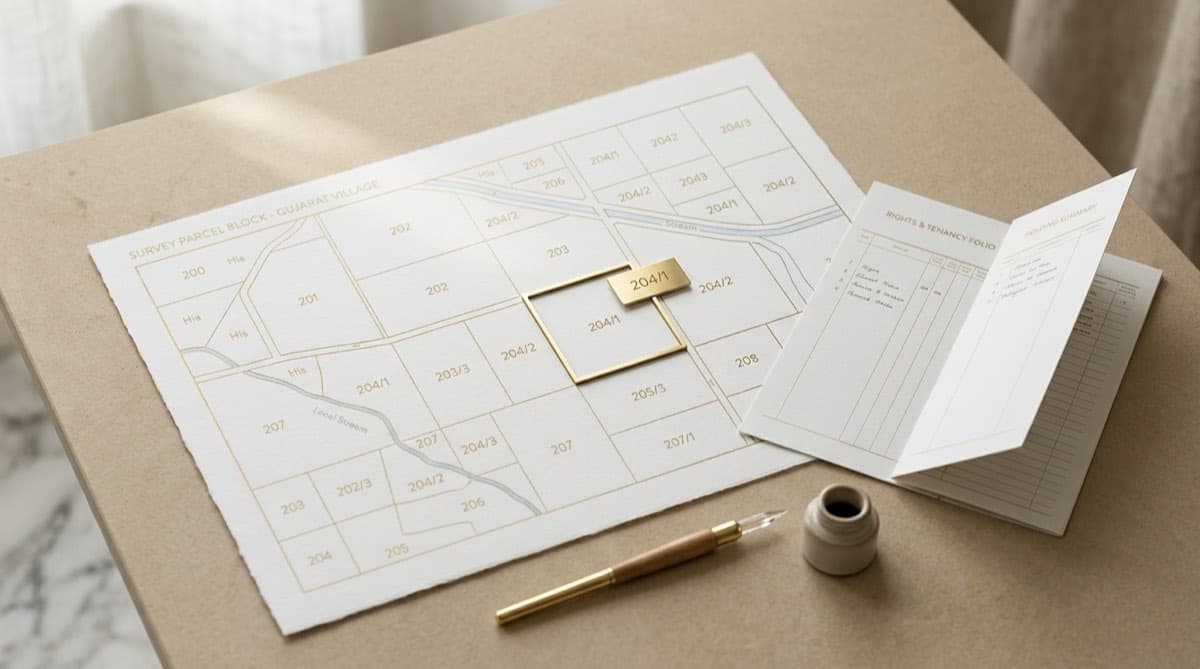
- On anyror.gujarat.gov.in you pick Rural or Urban land record, choose the query type, then drill down district to taluka to village to survey/khata number and clear a captcha — VF-7 (the 7/12) is the ownership-and-cultivation record, VF-8A is the Khata (account) and VF-6 is the mutation register. A digitally-signed copy costs a small nominal fee.
- Free on-screen "view" copies on AnyROR are informational only; the digitally-signed RoR (downloaded after OTP and a small fee) is the version banks, sub-registrars and courts treat as authentic.
- The Gujarat records map almost one-to-one onto Karnataka and Maharashtra: VF-7 is the Pahani/RTC equivalent, VF-8A is the Khata, and VF-6 is the mutation register (M-register / mutation entries elsewhere).
- AnyROR does not show registered deeds or encumbrances — for those you need the Sub-Registrar (Garvi / e-records) and court searches. The portal tells you who is recorded as owner, not whether the title is clean.
How do I check 7/12 (VF-7), 8A and mutation records on AnyROR Gujarat?
AnyROR ("Any Record of Rights") is Gujarat's public land-records portal, built on the state's e-Dhara system and run by the Revenue Department. To pull a record you choose whether the land is rural (agricultural / village land) or urban, select the exact query you need, narrow down by location and survey or khata number, and solve a captcha. Viewing the record on screen is free; a legally usable, digitally-signed copy costs a small nominal fee and is downloaded as a PDF after a one-time-password step.
The two entry points on the homepage are "View Land Record - Rural" and "View Land Record - Urban". Most agricultural and peri-urban diligence uses the Rural path; flats, TP-scheme plots and city properties usually sit under Urban (Property Card / City Survey).
What the AnyROR village forms actually are
Gujarat keeps land records as numbered "Village Forms" (VF / gam namuna). Three matter most for a title search:
| Form | Common name | What it tells you |
|---|---|---|
| VF-7 | 7/12, Satbara, RoR | Owner(s), survey/block number, area, tenure (old-tenure vs new/restricted), and cultivation column. The core ownership record. |
| VF-8A | 8A, Khata, Utara | The land-revenue account (khata) — every survey number held under one khata/holder, useful to see a holder's full landholding in a village. |
| VF-6 | 6, Mutation register | The running ledger of every change — sale, gift, inheritance, partition, mortgage entry — each with a mutation (entry) number. This is where history lives. |
A common mistake: VF-7 is not a title deed, and VF-8A is not proof of ownership. VF-7 is a record of rights reflecting the revenue position; VF-8A is an accounting view of a khata. Neither, on its own, proves marketable title — they record what the Talati has entered, not what a registered conveyance established.
If you are new to the whole exercise, our explainer on what a Title Search Report actually covers puts these records in context.
Step by step on the Rural path
- Open the portal and click View Land Record - Rural.
- From the query dropdown, pick what you need — the live options include VF-7 Survey No Details, VF-8A Khata Details, VF-6 Entry Details, 135-D Notice for Mutation, Integrated Survey No Details, New Survey No from Old for Promulgated Village, Know Khata by Owner Name, plus scanned-image options like Old Scanned VF-7/12 Details and Old Scanned VF-6 Entry Details.
- Select District, then Taluka, then Village from the dependent dropdowns (the live district list covers all of Gujarat).
- Enter the survey/block number (for VF-7) or the khata number (for VF-8A); for VF-6 you can browse entries.
- Type the captcha and click Get Record Detail. The record renders in Gujarati.
To check the same parcel's full chain, open VF-6 Entry Details and read every mutation entry in date order. Cross-reference each entry number against the VF-7 — a name on VF-7 with no supporting mutation in VF-6 is a red flag worth chasing.
Getting the legally-valid copy (digitally signed)
The free view is fine for a first look. For anything official, use Digitally Signed RoR from the homepage: enter your mobile number, verify the OTP, select the record type (VF-7, VF-8A, VF-6 and others), pay the nominal fee, and download the digitally-signed PDF. A certified physical copy from your nearest e-Dhara Kendra (the taluka-level land-records office) is also available for a similar nominal charge. The digital signature is what makes the document acceptable to banks, the Sub-Registrar and courts.
What is e-Dhara, and how does it relate to AnyROR?
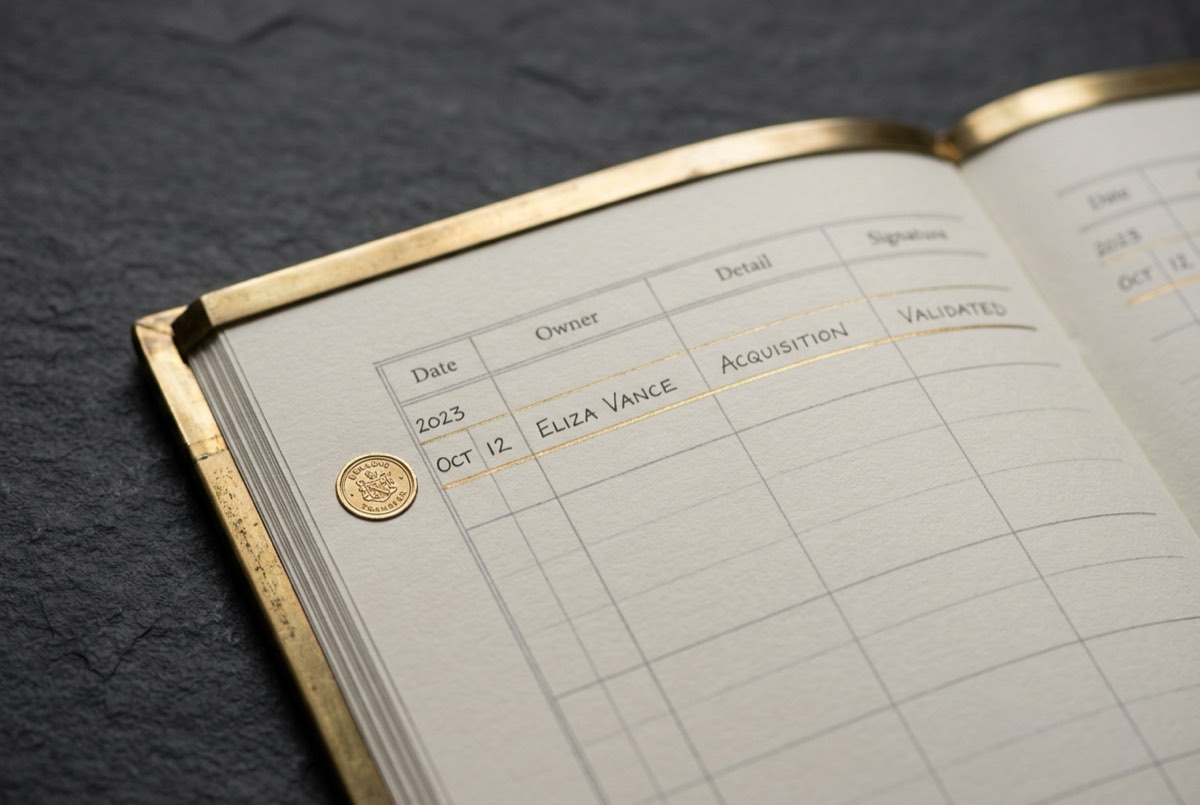
e-Dhara is the back-end land-records computerisation programme; AnyROR is the public-facing window into it. Mutations are entered and authorised at e-Dhara Kendras at the taluka level, and the authenticated data flows through to AnyROR for online access. So when you read a VF-7 online, you are reading the e-Dhara database of record — not a separate, lower-grade copy.
One Gujarat-specific wrinkle: many villages have undergone re-survey / promulgation, which replaced old survey numbers with new block/survey numbers. If your VF-7 search comes up empty under an old number, use New Survey No from Old for Promulgated Village to find the current number, or Integrated Survey No Details to see the consolidated picture. Mismatched old-vs-new numbers between a sale deed and the live record are a frequent, fixable confusion.
What about urban property and Property Cards?
For city land, use View Land Record - Urban, which serves the City Survey / Property Card maintained by the City Survey office, along with TP (Town Planning) scheme details and unit information. The Property Card is the urban analogue of the rural VF-7 — it records the holder, the City Survey number, area and tenure for surveyed urban land. As with rural records, a Digitally Sealed Property Card is the version with legal standing.
How do Gujarat's records compare to other states?
The naming changes state to state but the concepts transfer cleanly, which is why pan-India diligence reuses the same mental model. The record of rights, the holding account, and the mutation register exist almost everywhere.
| Concept | Gujarat (AnyROR) | Karnataka | Maharashtra | Telangana | Tamil Nadu |
|---|---|---|---|---|---|
| Record of rights | VF-7 (7/12) | RTC / Pahani | 7/12 (Satbara) | ROR-1B / Pahani | Patta / Chitta |
| Holding / account | VF-8A (Khata) | within RTC | 8A | n/a | n/a |
| Mutation register | VF-6 | Mutation register (MR) | Mutation (6/12) | n/a | n/a |
| Portal | anyror.gujarat.gov.in | Bhoomi | Mahabhumi / 7/12 portal | Dharani / Bhu Bharathi | TNREGINET |
If your deal spans states, these companion guides use the identical method: Bhoomi RTC for Karnataka and the 7/12 (Satbara) in Maharashtra. The national ULPIN / Bhu-Aadhaar 14-digit land ID is gradually being stamped onto records across states, including Gujarat, and is handy for tying a parcel to a single identifier.
What AnyROR cannot tell you (and where the real risk hides)
AnyROR is excellent for who is recorded as the holder and what changed when — but a record of rights is not a title certificate, and the portal is silent on several things that decide whether title is actually clean.
- Registered deeds and consideration. The sale/gift/mortgage deeds live with the Sub-Registrar (Gujarat's Garvi / e-records system), not on AnyROR. You must read the deed chain to confirm the mutations on VF-6 rest on valid, registered conveyances.
- Encumbrances and active mortgages. A revenue record may not surface a bank's charge, a CERSAI-registered security interest, or an unregistered agreement to sell. Encumbrance has to be searched separately.
- Litigation. Pending civil suits, partition disputes, injunctions or a 135-D mutation objection that has been challenged will not show as "disputed" on a plain VF-7. Court records (and the 135-D notice option itself) need a separate look.
- Tenure and restriction nuances. "New tenure" / restricted-tenure land carries transfer restrictions and premium-payment conditions that a quick read of the owner column can miss.
- On-ground reality. Boundaries, encroachment, actual possession and area discrepancies between deed, VF-7 and the map require a physical and spatial check.
These gaps are exactly the common title defects that catch buyers out, and working through a structured property due-diligence checklist is how a diligence team turns "the name matches" into "the title is marketable." On Deedwise, AI gathers these records and drafts the findings across all four pillars — Ownership, Land, Encumbrance, Litigation — but a qualified lawyer reviews and signs the final report. The portal is a starting point, not a substitute for legal sign-off.
Frequently asked questions
What is the difference between VF-7, VF-8A and VF-6 on AnyROR? VF-7 is the 7/12 record of rights — it shows the owner(s), survey/block number, area, tenure and cultivation details for a single parcel. VF-8A is the Khata (account) record, listing all survey numbers held under one revenue account. VF-6 is the mutation register, a chronological ledger of every change in rights (sale, gift, inheritance, mortgage entry), each with its own entry number. For a title check you read all three together.
Is the free AnyROR copy legally valid? No. The on-screen "view" copy is for information only. For any legal, banking or registration purpose you need the digitally-signed RoR (or a certified copy from an e-Dhara Kendra), which carries a digital signature from the Revenue Department. The signed copy is downloaded after an OTP step for a small nominal fee.
How much does a digitally-signed 7/12 cost on AnyROR? Viewing is free; a digitally-signed copy is a small nominal fee per record. A certified physical copy from an e-Dhara Kendra is similarly inexpensive. Exact charges can vary, so confirm the current fee on the portal at the time of download.
My old survey number shows no record — what happened? Many Gujarat villages were re-surveyed (promulgated), replacing old survey numbers with new block/survey numbers. Use the "New Survey No from Old for Promulgated Village" query to find the current number, or "Integrated Survey No Details" for the consolidated view. A mismatch between the number on an old deed and the live record is common and usually resolvable.
Does AnyROR show mortgages, court cases or registered deeds? No. AnyROR reflects the revenue record of rights and mutations only. Registered sale, gift and mortgage deeds are held by the Sub-Registrar (Garvi / e-records); encumbrances may also be registered with CERSAI; and litigation must be checked through court records. A clean VF-7 does not by itself prove the title is free of charges or disputes.
Can I use AnyROR for urban flats and city plots? Yes — use the "View Land Record - Urban" section, which serves the City Survey / Property Card, TP-scheme and unit details for surveyed urban land. The Property Card is the urban counterpart of the rural VF-7, and a Digitally Sealed Property Card is the version with legal standing.
Continue reading

How to Download a 7/12 (Satbara) Extract Online in Maharashtra — and 8A vs Property Card
8 min read

What Is Bhu-Naksha and How to View a Cadastral / Plot Map by Survey Number
10 min read
How to Check Banglarbhumi Khatian and Plot Records in West Bengal (RS vs LR vs CS)
8 min read

Bhoomi RTC for Karnataka Land Acquisition: A Developer's Guide
11 min read
Automate your due diligence
Skip the manual portal work.
Deedwise automates everything in this article — across every connected portal — and delivers a complete Title Search Report in hours.
Request Access