
TL;DR
- Before buying land in Karnataka, verify each document against its source: RTC/Pahani (especially Column 11), the mutation register, the mother deed plus an unbroken 30-year chain, a Kaveri Encumbrance Certificate, khata/e-Khata and tax receipts, the DC conversion order, the 11E or Phodi survey sketch, RERA, CERSAI, and eCourts/High Court/NCLT — and actively flag PTCL, Inam, and Gomala land. An Encumbrance Certificate alone is not enough.
- Group every document under the four pillars of a title search: Ownership, Land, Encumbrance, and Litigation. A document that looks clean in isolation can still hide a defect that only shows up when you cross-check it against another source.
- The single most common mistake is treating one record as proof of clear title. A clean RTC, a clean EC, or a fresh khata each tells you only one slice of the picture; you need all four pillars to read together.
- Agricultural land carries extra checks in 2026: the 79A/79B income/occupation bars were repealed in 2020 and have not been reinstated, but conversion, tenancy, and grant-land restrictions still apply.
- AI can gather, translate, and cross-reference these records at scale, but the final title opinion is a judgement call: a lawyer reviews the flags and signs off.
What is the complete document checklist before buying land in Karnataka?
The complete checklist is a set of source-backed records grouped under four pillars — Ownership, Land, Encumbrance, and Litigation — where each document is verified against the government portal that issues it, not accepted at face value from the seller. The list below is the master version; the rest of this article expands each pillar and explains how a defect hides inside an otherwise normal-looking document.
A title search is not "collect the documents the seller hands you." It is "independently pull each record from its source of truth and confirm the records agree with each other." That distinction is the whole game. The same logic underpins a formal Title Search Report, which is simply this checklist executed rigorously and signed by a lawyer.
| # | Document / record | Source of truth | Pillar | What it confirms |
|---|---|---|---|---|
| 1 | RTC / Pahani (13 columns) | Bhoomi portal | Ownership + Land | Current owner, extent, land type, Col.11 charges |
| 2 | Mutation register (MR / J-slip) | Bhoomi / taluk office | Ownership | How ownership changed; mutation is up to date |
| 3 | Mother deed + 30-year chain | Kaveri 2.0 / seller | Ownership | Unbroken root of title back ~30 years |
| 4 | Encumbrance Certificate (EC) | Kaveri 2.0 | Encumbrance | Registered mortgages, sales, releases |
| 5 | Khata / e-Khata + tax receipts | BBMP e-Aasthi / e-Swathu / CMC | Ownership + Land | Municipal record, up-to-date property tax |
| 6 | DC conversion order (DC/NA) | DC office | Land | Agricultural land legally converted to non-agricultural use |
| 7 | 11E sketch / Phodi / Tippani | Mojini (Survey Dept) | Land | Boundaries and that a part-parcel can be registered |
| 8 | Approved layout / plan sanction | BDA / BMRDA / local planning authority | Land | Layout is approved, not revenue/unauthorised |
| 9 | RERA registration (if a project) | RERA Karnataka | Land + Litigation | Project/parcel registration and complaints |
| 10 | CERSAI search | CERSAI | Encumbrance | Equitable mortgages not on the EC |
| 11 | eCourts / HC / NCLT search | eCourts, Karnataka HC, NCLT | Litigation | Active suits, attachments, insolvency |
The numbers here are a reference order, not a strict sequence — but ownership generally has to clear before the later checks mean anything.

Pillar 1 — Ownership: which documents prove who actually owns the land?
Ownership is established by reading the revenue record (who the government says owns it) against the registration record (who legally bought it), and confirming the two agree across an unbroken 30-year chain. A name on a single document is never enough.
The core ownership documents
- RTC / Pahani (Bhoomi). The Record of Rights, Tenancy and Crops is Karnataka's primary ownership record, set out across 13 columns. It records the current owner (Khatedar) and, where there are co-owners, their fractional shares. Pull it directly from Bhoomi rather than relying on the seller's copy. For a column-by-column reading and the red flags inside each, see how to read a Bhoomi RTC.
- Mutation register (MR / mutation extract). Every change of ownership — sale, inheritance, partition, court order — should appear as a mutation entry. The mutation tells you how the current owner came to be recorded, and whether the last sale has actually been reflected. Mutation lag in Karnataka commonly runs several months to over a year behind the Kaveri registration.
- Mother deed and the 30-year chain. The mother deed (root document) is the origin of the current title. From it, every transfer — buyer becoming the next seller — must be traceable forward to the present owner through registered instruments. An unbroken 30-year chain is the working standard for clear title in Indian property practice.
- Khata / e-Khata. The khata is the municipal/local-body ownership-and-assessment record. As of 2026, e-Khata is mandatory for property registration within BBMP limits — no property can be registered or transferred without a valid e-Khata. Rural and gramthana properties use e-Swathu (Form 9 / Form 11) instead.
How an ownership defect hides
The classic hidden defect is a mismatch between the RTC owner and the last Kaveri sale deed: the RTC still shows the previous owner because the mutation after the most recent sale was never completed. The seller looks like the owner on one record and not on the other. Distinguishing a harmless mutation lag from a genuine unregistered claim is exactly the kind of judgement a lawyer makes after the records are gathered.
The second is incomplete inheritance: a seller claims the land by inheritance but there is no probated will, succession certificate, or registered partition deed — and a co-heir can resurface years later.
Pillar 2 — Land: which records confirm the land type, conversion, and boundaries?
The Land pillar confirms what the land is — its classification, whether it can legally be used as intended, and whether its boundaries are firm. This is where Karnataka's most expensive surprises live: grant land, Gomala, and fake conversion orders.
Land classification and the agricultural question
The RTC records the nature of the land. Only Raiyatwari (private) land alienates freely. Watch for these classes, each of which restricts or voids a sale:
| Land type | What it is | Risk |
|---|---|---|
| Raiyatwari | Private patta land | Normal — freely transferable |
| Inam / granted land | Land granted by the state | Transfer restrictions; lock-in periods |
| PTCL land | Granted to SC/ST under the 1978 Act | Sale can be void and the land restored to the original grantee — down the whole chain |
| Gomala / kharab | Common grazing land / wasteland | Government land; cannot be privately sold; encroachment risk |
If you are buying agricultural land, note the current position: the 79A/79B restrictions (which barred high-income non-agriculturists from buying farmland) were repealed by ordinance in 2020 and, as of mid-2026, have not been reinstated despite political statements of intent. The practical checklist for a non-farmer buyer is covered in can a non-farmer buy agricultural land in Karnataka. Tenancy rights under the Karnataka Land Reforms Act 1961 can still independently block a sale.
Conversion and boundary documents
- DC conversion order (DC/NA order). If agricultural land is to be used for residential, commercial, or industrial purposes, it must be converted to non-agricultural use by the Deputy Commissioner's office. The order is not entered automatically in Bhoomi — you verify it separately, and you confirm it is genuine. Fake conversion orders are a known fraud; see how to verify a DC conversion order and spot a fake.
- 11E sketch / Phodi / Tippani (Mojini). You cannot register the sale of a portion of a survey number in Karnataka without an 11E sketch. A Phodi (sub-division) sketch maps separate holdings once a survey number is officially divided; the Tippani is the field-measurement reference. These confirm the parcel's boundaries are demarcated and registrable.
- Approved layout / plan sanction. For plotted land, confirm the layout is approved by the competent authority (BDA, BMRDA, or the local planning authority) — not a "revenue layout" sold on agricultural land without approval.
- K-GIS / spatial overlay. Cross-check the boundary, extent, and any road-widening, reservation, or buffer-zone lines against the cadastral map.
Pillar 3 — Encumbrance: how do you confirm there is no mortgage or charge?
You confirm there is no charge by reading three sources together — the Kaveri Encumbrance Certificate, RTC Column 11, and CERSAI — because each captures a different type of charge and none captures all of them. An EC alone is the single most over-trusted document in Indian property diligence.
The three encumbrance sources
- Encumbrance Certificate (Kaveri 2.0). The EC lists registered instruments at the Sub-Registrar's office — sale deeds, mortgage deeds, release deeds, gift deeds — for the period you query. Pull the maximum available period (30 years or the full digitised history). Every mortgage must have a matching release deed. A full instrument-type sweep on Kaveri catches Deposit-of-Title-Deed (DTD) memoranda that the standard EC view can miss. See Kaveri Online 2.0 for ECs and deeds.
- RTC Column 11. Records charges — bank loans, mortgages, and court cases — noted at the revenue level. But a blank Column 11 means "no charge recorded in the revenue system," not "no charge exists."
- CERSAI. The only official record of equitable mortgages — loans secured by deposit of title deeds with a bank, with no registered deed. These appear nowhere in Bhoomi and may not surface in a standard EC. A CERSAI search on the property and the seller's name is non-negotiable.
Tax receipts and dues
Pull the latest property tax receipts (BBMP e-Aasthi / CMC for urban, e-Swathu for rural) and confirm no arrears. The RTC also records outstanding land revenue. Unpaid dues create a charge that must clear before registration.
What the EC cannot tell you
An EC will not show an unregistered equitable mortgage, a charge filed only with CERSAI, a court attachment that has not yet been registered, or any instrument from a Sub-Registrar's office other than the one you queried. If the property's history spans an SRO jurisdiction boundary or a re-survey renamed the village, a single-office EC can quietly miss instruments. This is precisely why the EC sits alongside CERSAI and the RTC, never alone.
Pillar 4 — Litigation: how do you check the land is not in dispute?
You check litigation by searching the courts and tribunals by both the survey number and every recent owner's name — across eCourts, the Karnataka High Court, and (for corporate sellers) the NCLT. A property can have a flawless EC and still be the subject of an active injunction.
- eCourts. Search district and taluk courts for civil and criminal cases referencing the survey number and the seller's name. Title disputes often run under a person's name, not the parcel number.
- Karnataka High Court e-services. Writs, appeals, and LPAs that may not appear in eCourts — including challenges to the title or to a conversion order.
- NCLT (for company/LLP sellers). Check for insolvency (CIRP) or liquidation. A sale during a moratorium, or by a company in liquidation, can be void. Pair this with an MCA company-master check.
- Attachment and receiver orders. Cross-check the RTC and the Kaveri EC for any court attachment or receiver order noted against the parcel.
What a litigation search cannot guarantee
Court portals are only as complete as their data entry. A freshly filed suit may not yet be indexed; a case may be recorded under a mis-spelled name or an old survey number; and some matters (revenue tribunals, Lokayukta complaints, PTCL restoration proceedings) sit outside the main court portals. A "no result found" is reassuring, not absolute — which is why name-plus-number searching across multiple forums matters.
Karnataka-specific red flags to actively look for
Beyond the standard checklist, these Karnataka conditions deserve a deliberate, named check because they can void a registered sale:
- PTCL land (SC/ST granted land). Under the Karnataka PTCL Act 1978, a sale of granted SC/ST land in breach of grant conditions can be declared void and restored to the original grantee — and Karnataka courts have held that subsequent transfers down the chain can fall with it.
- Inam / DC-grant land within lock-in. Granted land typically cannot be sold for a statutory period and may need government permission to transfer.
- Gomala / Sarkari land. Common grazing or government land that has been encroached and dressed up with forged grant records — a documented fraud pattern in Karnataka.
- Fake DC conversion orders. Verify the order against the issuing office, not just the paper the seller provides.
- B-kharab portions. A part of an otherwise private parcel marked as government wasteland.
These are pan-India in spirit — every state has its tribal-land, grant-land, and common-land equivalents — but the names, statutes, and portals here are Karnataka's.
How Deedwise runs this checklist
Deedwise automates the source-pulling and cross-referencing for the portal-dependent checks above. It resolves the property's geography codes, scrapes Bhoomi (RTC, mutation), runs the full Kaveri instrument sweep (EC plus deed types), pulls K-GIS spatial data, and searches CERSAI, eCourts, the Karnataka High Court, and NCLT. Kannada records are translated, fields are extracted, and each check is given a pass / flag / pending status backed by the underlying evidence.
What stays human is the judgement: is an RTC-versus-sale-deed mismatch a harmless mutation lag or an unregistered claim? Is a Gomala notation fatal or a clerical error? The model gathers and drafts; a lawyer reviews the flags and signs the opinion. That division — automation for the gathering, a qualified professional for the conclusion — is the point. For developer teams, the longer operational version of this list is the developer's property due diligence checklist.
Frequently asked questions
Is an Encumbrance Certificate enough to confirm clear title in Karnataka?
No. An EC only lists instruments registered at one Sub-Registrar's office for the period queried. It will not show equitable mortgages (which appear only in CERSAI), unregistered claims, court attachments not yet registered, or instruments from other SRO jurisdictions. You need the EC together with the RTC, mutation, CERSAI, and a litigation search before relying on it.
What is the minimum chain of title period to verify before buying land?
The working standard in India is an unbroken 30-year chain of title, traced from the mother (root) deed forward through every registered transfer to the current owner. The Kaveri Encumbrance Certificate is the primary tool for tracing it; each buyer in one deed must appear as the seller in the next, with no unexplained gaps.
Can a non-farmer buy agricultural land in Karnataka in 2026?
The Sections 79A and 79B restrictions that barred high-income non-agriculturists from buying farmland were repealed by ordinance in 2020 and, as of mid-2026, have not been reinstated. However, conversion rules, tenancy rights under the Karnataka Land Reforms Act 1961, and grant-land restrictions still apply, so each agricultural parcel needs its own verification.
What is an 11E sketch and when do I need it?
An 11E sketch is a surveyor-prepared sketch of the specific portion of a survey number being sold. In Karnataka you cannot register the sale, gift, or partition of a part of a survey number without it. A Phodi (sub-division) sketch is the related document issued once a survey number has been officially divided into separate holdings.
What land types should I treat as red flags in Karnataka?
Treat PTCL land (granted to SC/ST under the 1978 Act), Inam or DC-grant land within its lock-in period, Gomala (common grazing) land, B-kharab government portions, and any parcel with a questionable DC conversion order as red flags. Several of these can render even a registered sale deed void, so they need specific verification, not a glance at the RTC.
Does an e-Khata or e-Aasthi entry prove I have clear title?
No. e-Khata (mandatory for BBMP property registration in 2026) is a municipal ownership-and-assessment record — it confirms the property is on the local body's books and tax is assessed, but it is not proof of title. It must be read alongside the RTC, the registered deed chain, the EC, and CERSAI to confirm ownership and the absence of charges.
Continue reading
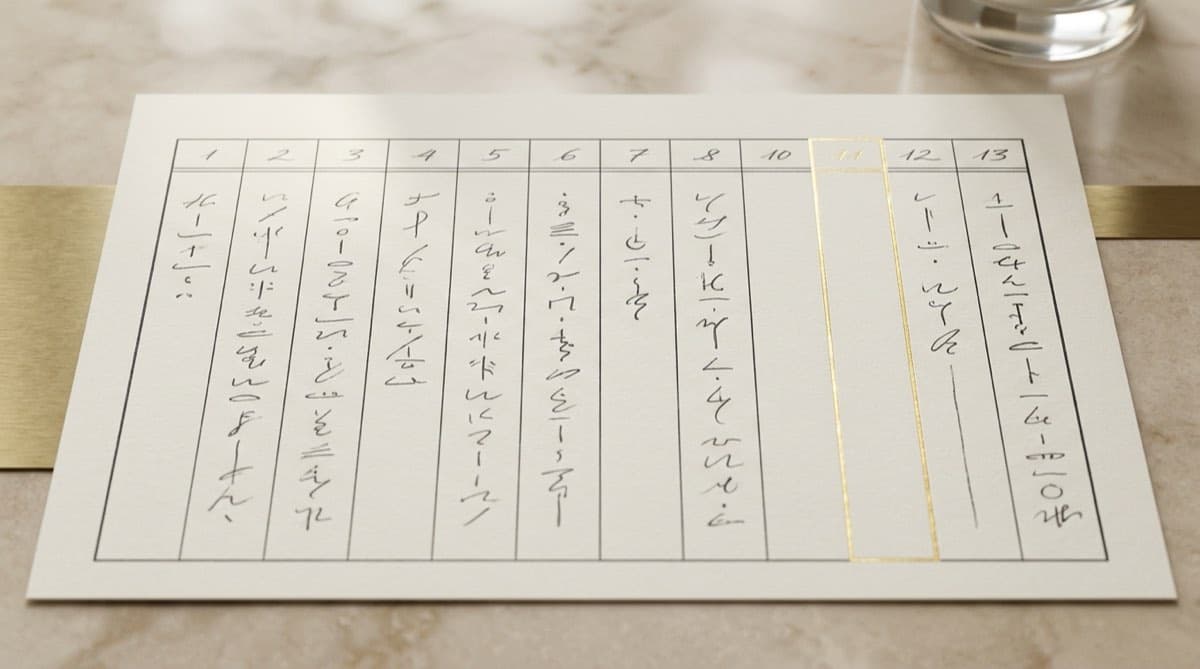
How to Read a Bhoomi RTC (Pahani): All 13 Columns and the Column 11 Red Flags
11 min read

How to Download an Encumbrance Certificate Online from Kaveri in Karnataka (Form 15 vs Form 16)
11 min read

How to Check Karnataka Land Records (RTC/Pahani) by Survey Number on Bhoomi
11 min read

The Developer's Property Due Diligence Checklist: 30+ Checks Before You Sign the MoU
13 min read
Automate your due diligence
Skip the manual portal work.
Deedwise automates everything in this article — across every connected portal — and delivers a complete Title Search Report in hours.
Request Access